
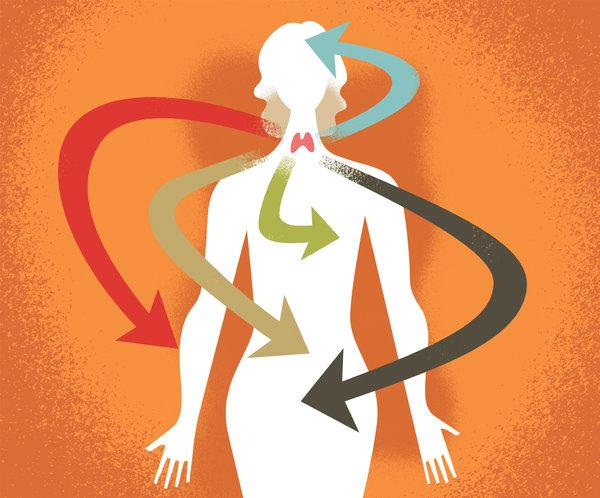
 Your thyroid is a butterfly-formed organ that sits just beneath your Adam’s apple. It is little, yet has a big task: Your thyroid is in charge of making hormones that influence pretty much every part of your body’s organs, cells, and tissues. Thyroid hormones help to control things like your pulse, body temperature, and metabolism. Think about your thyroid as your metabolic motor; keeping this little powerhouse sound is essentially imperative to keeping your entire body solid. Sadly, there are dangers to thyroid wellbeing that include:
- Stress
- PCBs – Polychlorinated biphenyls is a banned chemical still found throughout the environment
- Soy
- Pesticides
- Cigarette smoking
- Plastics
- Heavy metals
- Antibacterial Products
Difference between Hypothyroidism and Hyperthyroidism
What is hypothyroidism? To put it plainly, your thyroid organ can’t make enough hormones to work well. The thyroid organ controls each part of your body’s metabolism. In hypothyroidism, the organ’s hormone creation reduces. This moderates your metabolism, which can prompt weight gain. Hypothyroidism is the most common and affects around 4.6 percent of the U.S. populace.
Hashimoto’s thyroiditis is the most widely recognized cause of hypothyroidism. With this condition, your body assaults its own immune system. After some time, this assault makes the thyroid quit producing hormones, as it should which triggers hypothyroidism. Like many autoimmune sicknesses, Hashimoto’s thyroiditis happens more in women than men.
Hyperthyroidism happens when your body makes more than the body should of the thyroid hormones, thyroxine (T4) and triiodothyronine (T3), and winds up overactive. In the event that you have hyperthyroidism, you may encounter a quick heartbeat, expanded craving, tension, affects the ability to be warm, or sudden weight reduction. This can also bring on anxiety and depression.
Therapy for Thyroid Health
There are alternative ways to keep your thyroid healthy. Dr. Gail Ravello at Natural Medical Solutions Wellness Center will look at the underlying cause of what is making the thyroid overactive or underactive. By treating the body as a whole, she views the individual’s lifestyle, nutrition and she does bloodwork to get to the root of the problem. In doing so she is looking at, not just part of the thyroid, but the entire thyroid panel and immune system.
Book Appointment Today




Leave a Reply
Your email is safe with us.