
Understanding the Brain’s Role in Mental Health
Have you ever felt your heart race before a big presentation? That sudden panic isn’t just an invisible feeling; it’s your body’s control center reacting in real-time. According to modern neuroscience, the brain and mental health are completely intertwined within a tangible, three-pound physical organ.
Think of this system like a smartphone. You have the “hardware”—the physical structures and wiring that determine your baseline brain health. Then, you have the “software,” consisting of the chemical messages responsible for running your daily moods and cognitive function.
A glitch in this communication network is as physical as a broken bone. Researchers emphasize that viewing emotional struggles as a biological reality, rather than a character flaw, is a crucial first step toward effective treatment and healing.
The Mail Carriers of Your Mood: How Neurotransmitters Deliver Happiness
While the brain runs complex “software,” it relies on a highly physical delivery system. Think of your brain cells as houses separated by a tiny gap called a synapse. To communicate across this space, your brain uses chemical mail carriers called neurotransmitters.
Two famous messengers are serotonin and dopamine. Serotonin delivers a steady sense of calm, while dopamine provides that familiar rush of satisfaction when you check an item off your to-do list. During depression, a physical communication error often occurs: these crucial messages simply aren’t crossing the gap.
Because neurotransmitters play such a vital role in mood disorders, you can actively help the mail get delivered. Try these simple ways to boost serotonin naturally:
- Sunlight: Morning light signals your brain to increase chemical production.
- Diet: Protein-rich foods provide the essential building blocks for these messengers.
- Exercise: Physical movement actively speeds up the delivery process.
But sometimes these crossed wires do more than lower your mood—they actively trigger your internal defenses.

Why Your Brain’s ‘Car Alarm’ Won’t Stop Ringing: The Amygdala and Anxiety
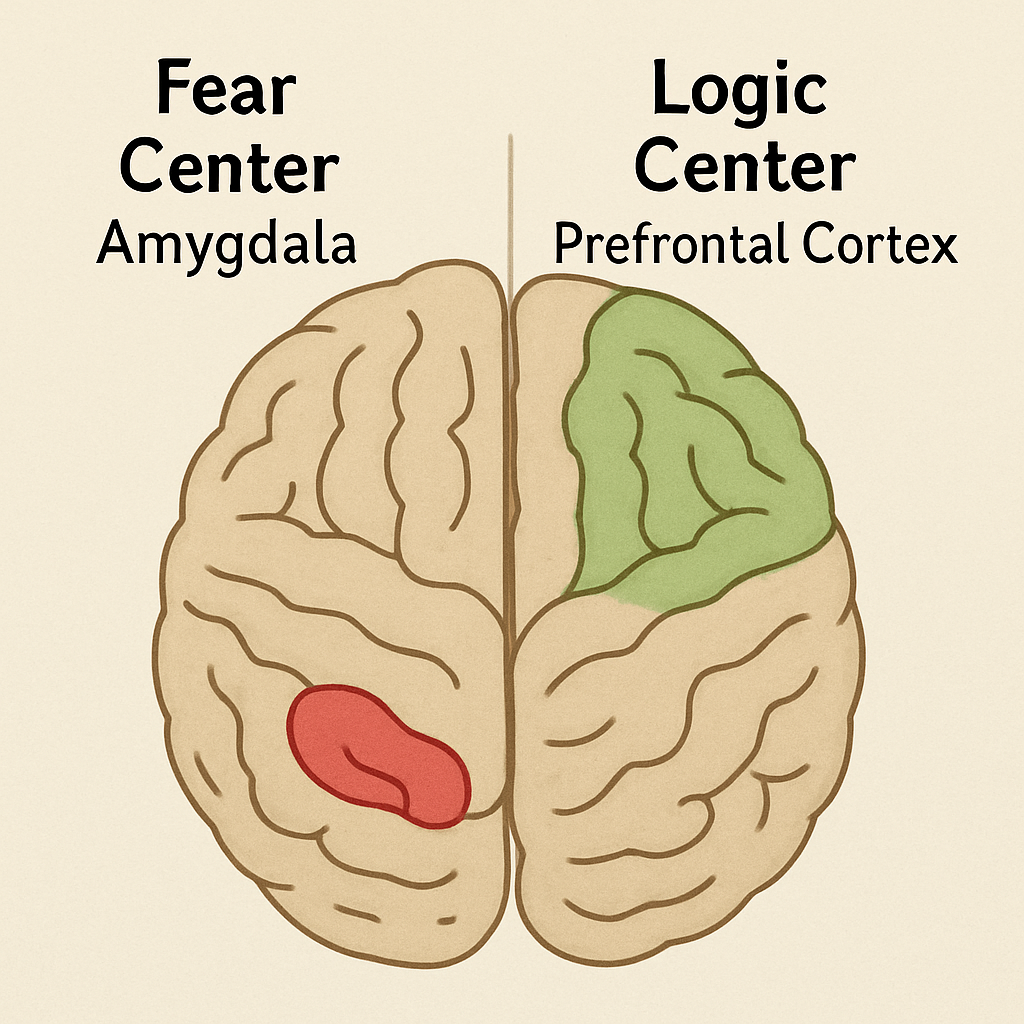
When misplacing your keys, that sudden pounding in your chest is driven by a security sensor called the amygdala, which detects threats and triggers survival mode. It commands the HPA axis to flood your body with cortisol, a powerful stress chemical. While helpful for outrunning predators, high cortisol levels and anxiety symptoms go hand-in-hand when this system overreacts to minor daily frustrations.
Thankfully, your brain has built-in brakes to quiet this blaring alarm. Just behind your forehead sits the logic center, responsible for prefrontal cortex function in executive control, which assesses situations and signals safety.
However, modern life often makes this car alarm far too sensitive. Researchers note the impact of chronic stress on the amygdala actually causes this fear center to become highly reactive over time. Consequently, your logical brakes get overwhelmed by the chemical flood, leaving you feeling constantly wired and exhausted.
This physical glitch explains why you cannot just “think” your way out of a panic attack. Fortunately, you can actively repair this alert system over time through intentional habit building.

Rewiring the Path: How Neuroplasticity Turns New Habits into Permanent Trails
We often assume our mental habits are permanently set in stone, but your brain is constantly reshaping itself. Imagine your thoughts as hikers in a forest. Every time you worry, you carve a deeper mental hiking trail, making it easier for anxiety to travel there automatically tomorrow. Neuroplasticity—your brain’s physical ability to rewire its own connections at any age—fundamentally changes emotional regulation.
To break these anxious loops, you must intentionally bushwhack a fresh route. Building cognitive resilience against stress involves creating a new daily habit through a step-by-step path-building exercise:
- Identify a negative thought.
- Pause to stop the automatic reaction.
- Choose a logic-based response.
Over time, your neglected anxiety trail naturally grows over, while the new logical path becomes a paved road. This isn’t just an idea; researchers reviewing mindfulness meditation brain imaging changes actually see the prefrontal cortex physically thicken, exactly like a muscle lifting weights. Even the strongest newly rewired brain, however, needs proper daily maintenance through nutrition and rest.
The Fuel and the Clock: How the Gut and Sleep Control Your Clarity
That familiar sensation of “butterflies” before a nervous moment is your digestive system talking directly to your head. Scientists call this physical highway the gut-brain axis, and your stomach actually produces many of the chemical messengers that regulate your daily mood. Because it acts as a “second brain” crucial for psychological wellness, the emerging field of nutritional psychiatry focuses on how your meals literally fuel your feelings.
Just as a busy kitchen needs a deep clean, your mind requires nightly maintenance. Your body’s internal clock manages this process through circadian rhythm effects on cognitive health. While you rest, your brain triggers a biological “rinse cycle” that washes away the metabolic waste cells leave behind, preventing that familiar morning mental fog.
Finally, simple movement actively changes this internal hardware. Leveraging physical activity for brain structure improvement is remarkably straightforward; researchers found that regular walking physically grows the hippocampus, the brain area managing memory. Mastering this routine maintenance creates a foundation for long-term cognitive resilience.
Building a Stronger Mind: Your Action Plan for Long-Term Cognitive Resilience
Mental health isn’t just “in your head”—it’s a physical system you can actively influence. Navigating therapy vs medication for chemical imbalance is simply pairing a software update with a hardware repair. Whether managing daily stress or addressing early childhood trauma and neural development, your brain often needs both tools to successfully rewire its pathways. This journey is about daily maintenance and building lifelong resilience, rather than searching for a flawless cure.
Start physically supporting your brain today with this simple checklist:
- Move for 10 minutes to clear the biological fog.
- Name one emotion out loud to engage your logic center.
- Keep a consistent sleep time to recharge your mental battery.




Leave a Reply
Your email is safe with us.